


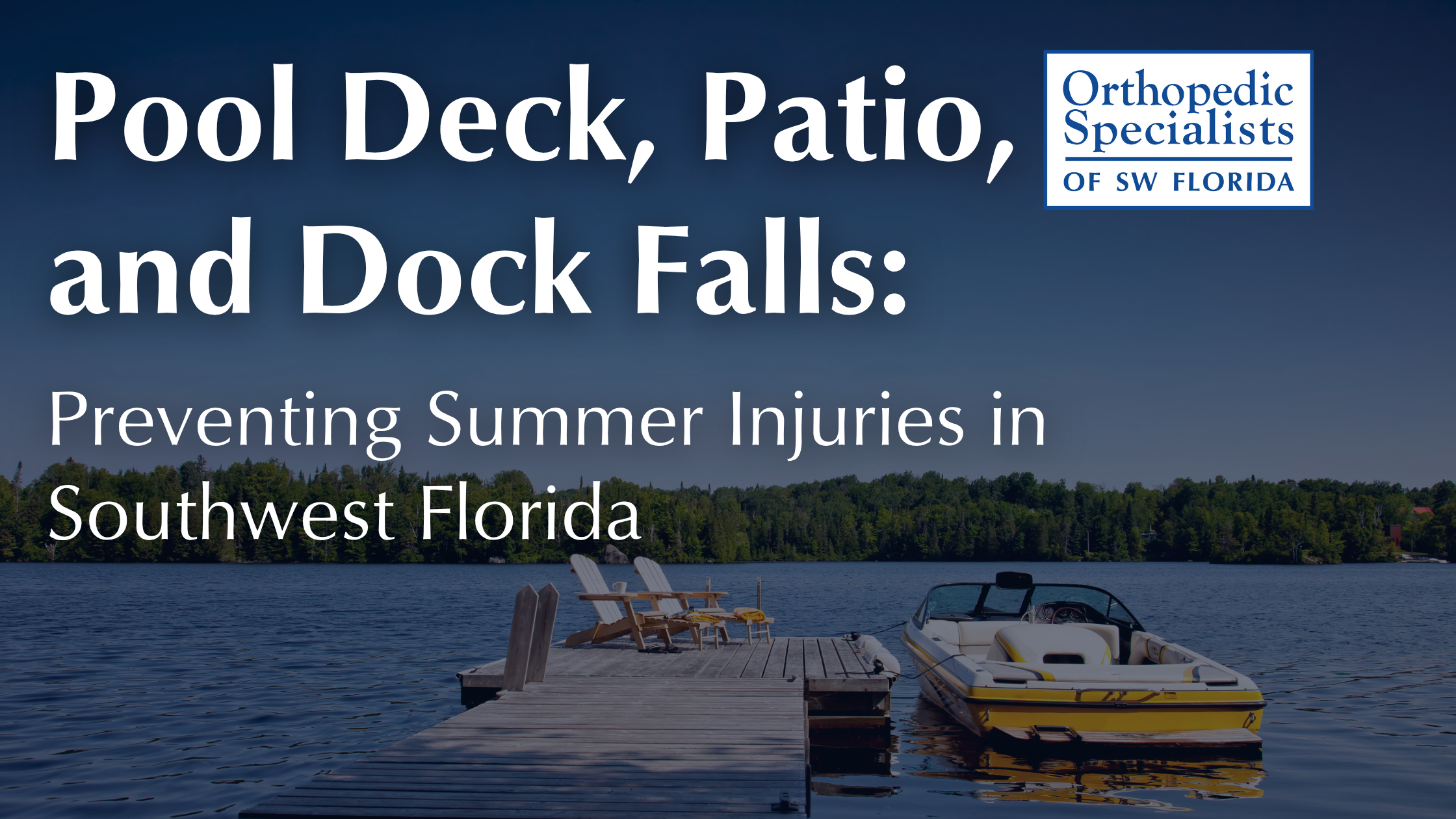
Pool Deck, Patio and Dock Falls: Preventing Summer Injuries in Southwest Florida
Summer in Southwest Florida is made for time outdoors. Families gather around backyard pools, friends meet on patios, and boaters spend long days moving between docks, decks and marinas. Unfortunately, many of the surfaces that make outdoor living possible can quickly become fall hazards.
Southwest Florida’s rainy season generally runs from May 15 through October 15 and is characterized by warm, humid conditions with frequent showers and thunderstorms. A brief afternoon storm can leave tile, concrete, pavers, wooden decking and dock surfaces wet within minutes. Pool water, algae, sunscreen, loose rugs, hoses and uneven walking areas can make these spaces even more difficult to navigate safely.
A fall may happen in seconds, but the resulting injury can affect work, exercise, travel and independence for weeks or months. Wrist fractures, ankle sprains, shoulder injuries, knee damage, hip fractures and head injuries may follow a slip or trip.
Older adults are especially vulnerable. More than one in four adults age 65 and older reports falling each year, and falls are the leading cause of injury for this age group.
The good news is that many outdoor falls are preventable. By identifying common hazards, improving the walking environment and knowing what to do after an accident, Southwest Florida residents can continue enjoying the season more safely.
Why Outdoor Living Areas Become Fall Hazards
A slip occurs when the foot loses traction. A trip happens when the foot catches on an object, raised edge or unexpected change in elevation. Both can send the body off balance before there is time to react.
Water is an obvious risk around a pool or dock, but it is not the only one. Sunscreen, body oils, spilled drinks, plant debris and cleaning products may create a slippery layer that is difficult to see.
Outdoor materials also change over time. Pavers can shift, concrete may crack, wooden boards may warp and dock hardware can loosen. Algae and mildew may develop in damp or shaded areas. A step that is easy to see during the day may become nearly invisible at dusk.
Common hazards include:
- Standing water after rain or pool use
- Smooth tile or sealed concrete
- Algae, mildew, leaves and plant debris
- Loose or curling outdoor rugs
- Garden hoses, pool toys and towels
- Uneven pavers or cracked concrete
- Warped or damaged dock boards
- Unmarked steps and elevation changes
- Missing or poorly positioned handrails
- Dim lighting around stairs and dock edges
- Footwear without adequate grip
- Walking barefoot on slick surfaces
- Carrying items that block the view of the ground
Wet surfaces, irregular walking areas, poor lighting, inadequate handrails and clutter are recognized contributors to slips, trips and falls. Prevention starts with recognizing that even a familiar outdoor space can become hazardous when weather, lighting or surface conditions change.
Common Injuries Caused by Outdoor Falls
The direction of the fall, the height of the drop and the way someone attempts to protect themselves can affect the type of injury that occurs.
Wrist and Hand Injuries
Many people instinctively reach out with one or both hands when they begin to fall. This can transfer the force of impact into the wrist, hand, forearm, elbow or shoulder.
A wrist sprain occurs when ligaments are stretched or torn. A fracture may involve the distal radius near the wrist or one of the smaller wrist bones.
Falling onto an outstretched arm is the most common cause of a distal radius fracture. Some scaphoid fractures cause only moderate pain and may initially be mistaken for wrist sprains.
Pain, swelling, bruising, reduced grip strength or tenderness near the base of the thumb should not be ignored after a fall. An injury that appears minor may require imaging to rule out a fracture.
Ankle and Foot Injuries
The ankle may roll when someone slips, steps onto an uneven paver or lands awkwardly near a dock edge. This can stretch or tear the ankle ligaments, causing a sprain.
Falls can also result in ankle, foot or heel fractures. Severe pain, rapid swelling, deformity or an inability to bear weight may indicate a more serious injury.
It is not always possible to distinguish a severe ankle sprain from a fracture without a medical examination.
Knee Injuries
A sudden twist while trying to regain balance may injure the ligaments, cartilage or meniscus of the knee. Landing directly on the kneecap can also cause bruising, bursitis or a fracture.
Warning signs include significant swelling, instability, locking, difficulty fully straightening the knee or a sensation that it is giving way.
Persistent knee pain following a fall deserves evaluation, even when the person was initially able to stand or walk. Some injuries become more noticeable after swelling and inflammation develop.
Shoulder Injuries
A person may land directly on the shoulder or injure it while reaching out to stop the fall. Possible injuries include a shoulder separation, dislocation, fracture, rotator cuff injury or labral tear.
A fall directly onto the shoulder is a common cause of an acromioclavicular, or AC, joint separation. Trying to stop a fall with an aggressive overhead reach may also damage structures within the shoulder.
Inability to lift the arm, visible deformity, severe pain or new weakness should be assessed promptly.
Hip and Pelvic Injuries
Hip fractures are especially concerning for older adults and people with osteoporosis. A simple fall from standing height can cause a serious fracture when bone strength is reduced.
Most hip fractures require surgery, hospitalization and extended rehabilitation. A person with a hip fracture may be unable to stand, bear weight or move the affected leg normally.
New groin or hip pain after a fall should be taken seriously, particularly in an older adult. Attempting to walk on a suspected hip fracture may cause additional pain or displacement.
Back, Neck and Head Injuries
A hard landing can strain muscles and ligaments in the neck or back. Falling from a raised dock or down outdoor steps may produce more significant spinal trauma.
Some neck sprain symptoms do not appear until hours later or even the next day. Severe neck pain, numbness, weakness or pain traveling into the arms or legs requires immediate medical attention.
A fall can also cause the head to strike concrete, stone, furniture or a railing. A concussion or traumatic brain injury can occur even when the person does not lose consciousness.
Emergency care is necessary when someone develops:
- A worsening headache
- Repeated vomiting
- Increasing confusion
- Unusual drowsiness
- Slurred speech
- Weakness or numbness
- A seizure
- Unequal pupils
- Loss of consciousness
Patients experiencing signs of a serious traumatic brain injury should receive immediate emergency evaluation.
How to Make a Pool Deck Safer
Pool areas require ongoing attention because water is expected to be present.
Start by checking whether the deck provides adequate traction when wet. Smooth decorative tile may look attractive but can become extremely slick. When resurfacing or renovating, consider materials and coatings specifically designed for wet outdoor environments.
Use a squeegee, broom or drainage system to prevent standing water from collecting. Repair low areas that repeatedly hold water. Clean algae, mildew and residue using products appropriate for the surface, then rinse thoroughly so the cleaner does not leave a slippery film.
Pool toys, floats, towels and hoses should be stored away from walking paths. Outdoor rugs should lie flat, resist movement and be appropriate for wet environments.
Encourage walking rather than running around the pool. This rule applies to adults as well as children.
Avoid carrying so many food trays, towels, bags or drinks that you cannot see the path in front of you. Making two trips is safer than stepping onto a slick or uneven area without a clear view of the ground.
How to Reduce Patio Fall Risks
Furniture legs, planters, outdoor rugs, extension cords, grills and decorative objects can narrow patio pathways.
Walk through the patio as though you are seeing it for the first time. Is there a clear route from the house to the seating area? Can someone move through the space without stepping around a hose or squeezing between pieces of furniture?
Repair cracks and raised pavers. Secure electrical cords along the edge of the space rather than across a walkway. Replace curled rugs and reposition furniture that blocks the natural path of travel.
Lighting is especially important after sunset. Illuminate steps, door thresholds and changes in elevation. Fixtures should provide consistent coverage without producing glare that makes the ground more difficult to see.
After rain, inspect the patio before guests arrive. Sweep away leaves and debris, move water from low areas and place a visible reminder near any surface that remains wet.
How to Prevent Falls on Docks
Docks present additional risks because a fall may lead to both an orthopedic injury and water exposure.
Inspect dock boards regularly for:
- Rot
- Cracks
- Warping
- Splinters
- Protruding nails
- Loose screws
- Unstable railings
Keep cleats, ropes, fishing equipment, coolers and electrical connections away from the main walking path. Maintain algae-prone surfaces according to the manufacturer’s recommendations.
Wear secure, slip-resistant footwear that fits properly. Slip-resistant shoes use specific tread patterns and sole materials designed to improve grip on wet surfaces. Loose flip-flops and slides may move under the foot, catch on boards or provide limited stability.
Install sturdy railings where appropriate and make step edges easier to see with contrasting markings. At night, illuminate the entire route from the home or marina to the boat.
Never jump between a moving boat and the dock. Keep at least one hand available for support, ask for assistance and wait until the boat is properly secured before loading or unloading belongings.
Additional Considerations for Older Adults
Falls are not an inevitable part of aging, but reduced lower-body strength, balance changes, vision problems, certain medications and previous falls can increase risk.
Older adults should discuss fall risk with a healthcare provider, review medications that may cause dizziness or drowsiness, maintain appropriate physical activity and address vision or footwear concerns. Balance and strength training may also help when guided by a qualified healthcare professional.
Outdoor paths should be wide, stable, well lit and free of clutter for guests using a cane, walker or another mobility device. Handrails should be reachable, and seating should be available so someone does not have to cross a large wet area without a place to rest.
A previous fall should not be dismissed. Fear of falling may lead someone to limit activity, contributing to further weakness and reduced confidence.
An orthopedic or physical therapy evaluation can help identify pain, gait changes, weakness or balance concerns that may be addressed through an individualized treatment or rehabilitation plan.
What to Do Immediately After a Fall
Do not rush to stand. Take a moment to determine what hurts and whether you feel dizzy, confused or unable to move normally.
When a serious injury is possible, remain still and ask someone to call for help. Do not attempt to “walk off” severe pain, and avoid putting weight on an injured leg or ankle when a fracture is suspected.
For a mild soft-tissue injury, initial care may include:
- Protecting the injured area
- Reducing activities that increase pain
- Applying a wrapped cold pack for short periods
- Elevating the injured limb
- Monitoring symptoms closely
Medication should only be used when it is safe for the individual and consistent with guidance from a healthcare professional.
Symptoms can become more noticeable after the initial adrenaline wears off. Watch for increasing pain, swelling, bruising, weakness, numbness or loss of motion.
Returning to sports, boating, yard work or exercise too soon may worsen an injury and prolong recovery. Persistent soft-tissue symptoms should be evaluated to reduce the risk of ongoing damage or instability.
When to Seek Emergency or Orthopedic Care
Call 911 or go to the nearest emergency department when a fall causes:
- Loss of consciousness
- Signs of a serious head injury
- Severe neck or back pain
- New numbness, weakness or paralysis
- Heavy bleeding
- Visible bone or an open fracture
- Obvious deformity
- A suspected hip fracture
- Difficulty breathing
- An inability to move the injured person safely
- A fall into the water with breathing complications
Prompt orthopedic evaluation is appropriate for persistent pain, significant swelling, reduced movement, joint instability, worsening bruising or an inability to bear weight.
Imaging may be necessary because fractures and serious soft-tissue injuries cannot always be identified by appearance alone. X-rays can assess many bone injuries, while MRI, ultrasound or other testing may be used when tendon, ligament, cartilage or muscle damage is suspected.
Comprehensive Orthopedic Care After a Fall at OSSWF
A summer fall should not be dismissed simply because it happened at home, beside the pool or during a day on the water. Early diagnosis can help prevent a missed fracture, ongoing instability, altered walking mechanics or prolonged pain.
Orthopedic Specialists of Southwest Florida provides comprehensive care for injuries involving the foot and ankle, knee, hip, hand and wrist, shoulder, elbow and spine.
OSSWF also offers in-office imaging and physical, occupational and hand therapy, allowing multiple stages of orthopedic care to be coordinated within one practice.
Treatment depends on the injury and may include bracing, activity modification, medication, injections, physical or occupational therapy, fracture care or surgery when medically necessary.
Rehabilitation can help patients rebuild strength, mobility, balance and confidence following an injury. Therapy may also address weaknesses or movement changes that could increase the risk of another fall.
Do Not Let a Summer Fall Keep You Sidelined
Southwest Florida’s pools, patios and waterways are meant to be enjoyed. Better lighting, clear pathways, slip-resistant footwear, routine surface maintenance and sturdy handrails can help reduce the likelihood that a summer gathering ends with an injury.
When a fall does occur, listen to your body. Pain, swelling, weakness or difficulty walking are signals that deserve attention.
If you have been injured in a pool deck, patio or dock fall, schedule an evaluation with Orthopedic Specialists of Southwest Florida. Our experienced orthopedic team can identify the source of your symptoms and create a personalized treatment plan designed to help you recover safely and return to the activities that make life in Southwest Florida special.
Call OSSWF at (239) 334-7000 or request an appointment today.
Orthopedic Specialists of Southwest Florida
14601 Hope Center Loop
Fort Myers, Florida 33912
Comprehensive orthopedic care, from diagnosis and imaging through treatment and rehabilitation, all under one roof.
This article is intended for general educational purposes and is not a substitute for individualized medical advice, diagnosis or treatment from a qualified healthcare professional.